

Do Americans Still Support War?
In the weeks following the September 11 attacks, support for military action in the United States was not just high—it was overwhelming. Flags appeared on every street. Approval ratings for political leadership surged. War, framed as both a necessity and a moral obligation, commanded near-universal backing.
Check here for more of my posts on Empire and Resistance.
Fast forward to today, and the atmosphere could not be more different.
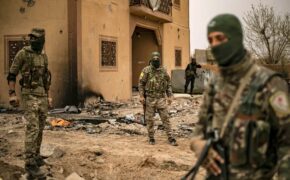
Military interventions continue. Fighter jets are still deployed. Conflicts still escalate. Yet something fundamental has shifted—not necessarily in the behaviour of the United States, but in how that behaviour is perceived by its own population.
This raises an increasingly urgent question: Do Americans still support war, or has something deeper changed?
This article argues that the answer lies not in simple “war fatigue,” but in a structural collapse of trust. Over the past two decades, a series of political decisions, military outcomes, and high-profile disclosures have fundamentally altered how Americans interpret the justification for war. What has eroded is not just enthusiasm—but belief itself.
Is there still American support for war?

What Did American Support for War Used to Look Like?
Historically, public support for war in the United States has followed a relatively consistent pattern. At the outset of a conflict—particularly one framed as defensive or morally justified—support tends to be high.
Following 9/11, this dynamic was on full display. Polling at the time showed overwhelming approval for military action in Afghanistan, with support often exceeding 80–90 percent. The invasion was widely framed as a direct response to an attack on American soil, and few questioned its legitimacy.
The early stages of the Iraq War in 2003 followed a similar trajectory, though with slightly more division. Initial support hovered around 70 percent, bolstered by claims that Iraq possessed weapons of mass destruction and posed an imminent threat.
This pattern is not unique to the 21st century. During the early years of the Vietnam War, public support was also relatively strong. The conflict was justified through the lens of containment and anti-communism, and the Gulf of Tonkin Incident was used to secure congressional backing.
In each case, three elements were present:
- A clear narrative of threat
- A sense of moral justification
- A baseline level of trust in government and media institutions
Together, these factors created what might be described as a “legitimacy buffer”—a period during which the public accepted the necessity of war, even if doubts emerged later.

The Iraq War and the Beginning of Distrust
If there is a single turning point in modern American attitudes toward war, it is the Iraq War.
The justification for the 2003 invasion rested heavily on the claim that Iraq possessed weapons of mass destruction. These weapons were never found.
As the war progressed, the gap between the stated rationale and the observable reality became increasingly difficult to ignore. Casualties mounted. Costs escalated. The promised quick victory failed to materialise.
Public opinion shifted accordingly. By the mid-2000s, a majority of Americans believed the war had been a mistake.
This shift, however, was not simply about disapproval of a particular conflict. It marked the beginning of a deeper rupture: a loss of confidence in the information used to justify war in the first place.
The Iraq War did not just fail militarily or strategically—it failed narratively. And once that narrative collapsed, it took trust with it.

The Evidence Era: When Secrecy Became Visibility
If Iraq cracked trust, the following decade shattered it.
The release of classified materials by WikiLeaks in 2010, including the Iraq and Afghanistan war logs, provided unprecedented insight into the realities of modern warfare. Civilian casualties, previously obscured or underreported, became visible at scale.
Three years later, Edward Snowden’s disclosures revealed the extent of mass surveillance conducted by the U.S. government, including the monitoring of its own citizens.
These events did not simply expose isolated incidents. They revealed systems.
At the same time, earlier scandals such as the abuse of detainees at Abu Ghraib and the ongoing operation of the Guantanamo Bay detention camp had already begun to challenge the moral framing of U.S. military actions.
Drone warfare added another layer of complexity. Reports that U.S. citizens had been targeted and killed in Yemen raised profound legal and ethical questions.
The cumulative effect of these revelations was significant.
For many Americans, the issue was no longer whether a particular war was justified, but whether the institutions responsible for making that case could be trusted at all.

Forever Wars and the Psychology of Exhaustion
Alongside these revelations came another defining feature of modern conflict: duration.
The wars in Afghanistan and Iraq became the longest in U.S. history. What began as targeted interventions evolved into prolonged, ambiguous engagements with no clear endpoint.
The financial cost is estimated in the trillions. The human cost, both domestically and abroad, is incalculable.
Over time, this produced what is often described as “war fatigue.” But fatigue alone does not fully capture the shift.
Fatigue implies exhaustion without necessarily challenging belief. What emerged instead was a form of learned scepticism.
Americans had seen wars begin with confidence and end without resolution. They had seen justifications unravel. They had seen objectives change.
The result was not just tiredness—but doubt.
Modern Conflicts and the Crisis of Legitimacy
Today’s conflicts unfold in a radically different information environment.
During Vietnam, images of war reached the public through limited media channels, often delayed and curated. In contrast, modern conflicts are documented in real time, across multiple platforms, by a wide range of actors.
This has profound implications for how war is perceived.
Official narratives no longer operate in isolation. They compete with alternative sources of information, including independent journalists, eyewitness accounts, and digital footage.
Conflicts involving Ukraine, Gaza, and rising tensions with Iran are not just military events—they are information environments in which legitimacy is constantly contested.
This does not necessarily mean that the public has access to perfect information. But it does mean that the monopoly over narrative has been broken.
As a result, support for military action is no longer driven solely by the presentation of a compelling case. It is filtered through a pre-existing layer of scepticism.

Generational Divide: Why Younger Americans Are More Sceptical
One of the most striking features of modern public opinion on war is the generational divide.
Younger Americans—particularly Millennials and Generation Z—are consistently more sceptical of military intervention than older generations.
This is not accidental.
These generations came of age during the Iraq and Afghanistan wars. They witnessed the justifications, the outcomes, and the subsequent revelations in real time.
They are also the first generations to grow up fully immersed in the digital information ecosystem, where competing narratives are readily accessible.
At the same time, trust in traditional institutions—including government and mainstream media—has declined significantly among younger cohorts.
The result is a population that is not disengaged, but highly critical.
Do Americans Still Support War—or Just Accept It?
This leads to a crucial distinction.
Support and acceptance are not the same.
It is entirely possible for a state to engage in military action without broad public enthusiasm. Indeed, this has increasingly become the norm.
Polling data suggests that while Americans may support specific actions under certain conditions, there is far less appetite for prolonged, large-scale interventions.
In other words, war can still be carried out—but it is no longer easily sold.
The mechanisms of military power remain intact. What has weakened is the ability to generate sustained public belief in their necessity.

The Bigger Picture: A Crisis of Legitimacy
At its core, the question of whether Americans support war is really a question about legitimacy.
War requires more than capability. It requires a narrative that is perceived as credible, justified, and morally coherent.
Over the past two decades, each of the pillars supporting that narrative has been eroded:
- Justifications have been challenged
- Outcomes have been inconclusive
- Institutions have lost trust
What remains is a system that can still act, but struggles to persuade.
This does not mean that war will disappear. But it does mean that its political and psychological foundations are increasingly unstable.
War Fatigue in America
The United States has not stopped going to war. But something has changed in how those wars are understood.
The shift is not simply from support to opposition, or from interventionism to isolationism. It is from belief to scepticism.
Where once the public might have accepted the premise of war and questioned it later, today that premise is questioned from the outset.
And once trust is gone, it is extraordinarily difficult to rebuild.
You can sustain a war machine without trust. But you cannot sustain belief in it.
And without belief, every war begins to look the same.

☕ Loving my work? Aw, thanks.
If something I wrote lit a spark or gave you something to think about, why not buy me a coffee? It’s a small gesture that helps keep this work honest, independent, and fiercely human.
References
Public Opinion & Trust in Government
- Pew Research Center
Public Trust in Government: 1958–2024
https://www.pewresearch.org/politics/2024/ - Gallup
Confidence in Institutions (1973–2024)
https://news.gallup.com/poll/1597/confidence-institutions.aspx - Pew Research Center
Public Support for U.S. Military Engagement
https://www.pewresearch.org/politics/
Vietnam, Iraq, Afghanistan — Public Support
- Gallup
Vietnam War Approval Trends
https://news.gallup.com/poll/18097/iraq-versus-vietnam-comparison-public-opinion.aspx - Pew Research Center
Iraq War: Public Opinion Timeline
https://www.pewresearch.org/ - Chicago Council on Global Affairs
American Public Opinion and Foreign Policy
https://www.thechicagocouncil.org/research/public-opinion
Costs of War (Financial & Human)
- Costs of War Project
The Costs of War (Iraq, Afghanistan, post-9/11 conflicts)
https://watson.brown.edu/costsofwar/ - Congressional Budget Office
Budgetary Costs of U.S. Wars
https://www.cbo.gov/
Iraq War & WMD Narrative
- U.S. Senate Intelligence Committee
Report on Prewar Intelligence on Iraq (2004)
https://www.intelligence.senate.gov/ - BBC News
Iraq War and Weapons of Mass Destruction Timeline
https://www.bbc.com/news
WikiLeaks & War Logs
- WikiLeaks
Iraq War Logs (2010)
https://wikileaks.org/ - The Guardian
Iraq War Logs Coverage
https://www.theguardian.com/world/iraq-war-logs
Snowden & Surveillance
- Edward Snowden
NSA Surveillance Disclosures (2013) - The Guardian
NSA Files Reporting
https://www.theguardian.com/us-news/the-nsa-files - Washington Post
Snowden Leaks Coverage
https://www.washingtonpost.com
Abu Ghraib & Guantanamo Bay
- U.S. Department of Defense
Taguba Report on Abu Ghraib (2004) - Amnesty International
Guantanamo Bay Reports
https://www.amnesty.org - Human Rights Watch
Detention and Torture Reports
https://www.hrw.org
Drone Warfare & Targeted Killings
- Bureau of Investigative Journalism
Drone Warfare Data and Civilian Casualties
https://www.thebureauinvestigates.com - American Civil Liberties Union
Targeted Killing of U.S. Citizens (Al-Awlaki case)
https://www.aclu.org
Generational Attitudes & Media Trust
- Pew Research Center
Trust in Media and Government by Generation
https://www.pewresearch.org - Knight Foundation
American Views on Media and Democracy
https://knightfoundation.org
Additional Context: War, Legitimacy & Political Trust
- Mueller, John. War, Presidents, and Public Opinion. (1973)
- Jentleson, Bruce W. American Foreign Policy: The Dynamics of Choice in the 21st Century.
- Nye, Joseph S. Soft Power: The Means to Success in World Politics.
- Chomsky, Noam. Hegemony or Survival: America’s Quest for Global Dominance.
Thank You for Reading!
I hope you enjoyed this post and found it insightful. If you did, feel free to subscribe to receive updates about future posts via email, leave a comment below, or share it with your friends and followers. Your feedback and engagement mean a lot to me, and it helps keep this community growing.
If you’re interested in diving deeper into topics like this, don’t forget to check out the Donc Voila Quoi Podcast, where I discuss these ideas in more detail. You can also follow me on Pinterest @doncvoilaquoi and Instagram @jessielouisevernon, though my accounts have been shut down before (like my old @doncvoilaquoi on Instagram), so keep an eye out for updates.
Amazon has graciously invited me to take part in their Amazon Influencer Program. As such, I now have a storefront on Amazon. I warmly invite you to explore this carefully selected collection. Please be advised that some of my posts may include affiliate links. If you click on an affiliate link and subsequently make a purchase, I may receive a modest commission at no additional cost to you. Utilizing these affiliate links helps to support my ongoing commitment to providing thoughtful and genuine content.

Comments (0)