

Underreported Conflicts and the Illusion of a Single War
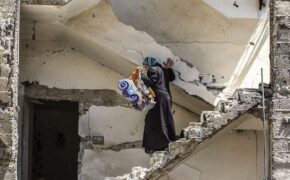
At any given moment, public discourse tends to behave as though there is only one conflict worth watching. At present, that attention is fixed predictably on Iran, Israel, and the geopolitical shockwaves radiating outward from their confrontation. It dominates headlines, saturates social media feeds, and anchors public consciousness in a way that creates the impression that this is the singular defining crisis of our era. Yet the reality is that the modern world is not shaped by one war at a time. It is shaped by simultaneous violence occurring across multiple continents, political systems, and cultural contexts, much of which receives only fleeting acknowledgment, if any at all.
<< Check here for more of my posts on Empire and Resistance >>
Across the globe, from sub-Saharan Africa to South Asia, from the Caribbean to Southeast Asia, millions of people are currently living inside active conflict zones that rarely break into sustained international consciousness. Entire cities are collapsing, civilian populations are being displaced, and patterns of violence are repeating themselves with devastating familiarity, all while much of the world remains focused elsewhere. The uncomfortable truth is that what determines whether a conflict is widely discussed is not always the scale of suffering involved, but rather a combination of proximity, strategic interest, political relevance, and media narrative. Some wars are treated as global emergencies while others are relegated to the background, regardless of comparable or even greater levels of devastation. This article explores ten such conflicts, examining where they are taking place, how they emerged, who is involved, and why they continue to matter even when the wider world has chosen not to look too closely.

1. Sudan – Civil War in North-East Africa
Sudan is located in North-East Africa, bordering Egypt to the north, Ethiopia to the east, Chad to the west, and the Red Sea to the northeast, placing it at a geographical crossroads between the Arab world and sub-Saharan Africa. For decades the country has been shaped by political instability, military authoritarianism, and ethnic division, all of which laid the groundwork for the crisis that is unfolding today. The current conflict erupted in April 2023, but its origins can be traced back to the fall of long-time ruler Omar al-Bashir in 2019 and the unstable political transition that followed. Rather than moving smoothly into democratic governance, Sudan became trapped in a struggle for power between rival armed factions within the state itself.
The principal actors in the war are the Sudanese Armed Forces, the country’s formal military, and the Rapid Support Forces, a powerful paramilitary organisation whose roots lie in the Janjaweed militias that were heavily implicated in the Darfur genocide during the early 2000s. Tensions between these two groups escalated over disputes surrounding military integration and political control, eventually erupting into open warfare. What began as a power struggle quickly transformed into full-scale urban combat, particularly in Khartoum, the capital, where residential districts, hospitals, and civilian infrastructure became battlefields.
The humanitarian toll has been catastrophic. Tens of thousands are believed to have been killed, while more than fourteen million people have been displaced, creating one of the largest displacement crises currently unfolding anywhere in the world. At the same time, famine conditions have begun emerging in multiple regions, compounding the suffering of a population already devastated by years of instability. Reports from the United Nations and human rights observers have detailed allegations of ethnic cleansing, systematic sexual violence, mass killings, and targeted attacks on non-Arab communities, particularly in Darfur. For many observers, the patterns of violence bear disturbing similarities to the atrocities committed in the region two decades ago.
Sudan matters not only because of the scale of the suffering taking place within its borders, but because its strategic and symbolic importance demonstrates how quickly even a geopolitically significant state can collapse into prolonged violence when international attention wanes. It stands as a reminder that humanitarian catastrophe does not have to be hidden to be ignored; sometimes it is simply overlooked because it is happening somewhere the world has subconsciously deemed peripheral.

2. Yemen – War in the Arabian Peninsula
Yemen occupies the southern tip of the Arabian Peninsula, bordering Saudi Arabia and Oman and overlooking some of the world’s most strategically significant maritime trade routes. Despite this geographic importance, Yemen remains one of the poorest countries in the Arab world and has spent much of the modern era grappling with political instability, tribal fragmentation, and economic underdevelopment. The current war began in 2014 when Houthi rebels, formally known as Ansar Allah, seized control of the capital city of Sana’a and forced the internationally recognised government into exile. In response, a Saudi-led coalition launched military intervention in 2015, transforming what had initially been a domestic political crisis into a broader regional conflict.
Since then, Yemen has become the site of a highly complex proxy war involving local factions, regional powers, and international interests. The Houthis remain the dominant force in much of the north, while anti-Houthi forces, southern separatists, militias, and foreign-backed groups continue to compete for influence elsewhere in the country. This fragmentation has made peace exceptionally difficult to achieve and has prolonged the suffering of civilians caught between multiple warring parties.
The humanitarian consequences have been devastating. Millions of Yemenis face acute food insecurity, healthcare infrastructure has largely collapsed, and preventable disease outbreaks, including cholera, have spread through vulnerable communities. The war has also generated repeated allegations of serious violations of international law, including airstrikes on civilian infrastructure such as schools and hospitals, blockades restricting the movement of food and medicine, and the recruitment of child soldiers by various factions.
Perhaps the most striking feature of Yemen is not simply the scale of destruction, but the way it has faded from public discourse despite never truly ending. It has become one of those conflicts that continues almost invisibly in the background, no less brutal than before but no longer deemed sufficiently novel to sustain widespread attention. Yemen demonstrates how war can become normalised through repetition, and how immense suffering can quietly continue once the world grows accustomed to it.

3. Democratic Republic of Congo – Resource War in Central Africa
The Democratic Republic of Congo is located in Central Africa and is one of the largest and most resource-rich countries on the continent. The primary conflict zone lies in the eastern provinces near the borders with Rwanda and Uganda, an area that has experienced near-constant instability since the aftermath of the 1994 Rwandan genocide. That genocide triggered a massive regional destabilisation, leading to a succession of wars that drew in multiple neighbouring states and left behind a fragmented landscape of armed groups and militias.
Today, violence in eastern Congo is driven by a combination of ethnic tension, political instability, regional interference, and economic exploitation. Numerous armed groups operate throughout the region, including the M23 rebel movement, local militias, and criminal factions, all competing for territory and influence. However, one of the most significant factors sustaining the violence is the region’s extraordinary mineral wealth. Eastern Congo contains vast reserves of cobalt, coltan, gold, and other resources essential to modern electronics, battery production, and renewable technology.
This means that the conflict is not merely a regional tragedy but one deeply tied to global economic systems. The minerals extracted from Congolese soil help power smartphones, laptops, electric vehicles, and countless technologies relied upon in the developed world. Yet the extraction process is frequently linked to forced labour, exploitative mining conditions, and armed groups using violence to control supply routes.
The humanitarian cost is enormous. Millions have been displaced, civilian massacres remain common, and sexual violence is used so systematically that the region has at times been described as one of the most dangerous places in the world to be a woman. The conflict in Congo is often called one of the deadliest since the Second World War, and yet it receives only sporadic international coverage. This disparity between the conflict’s severity and its visibility forces an uncomfortable reflection on the relationship between global consumption and distant suffering, and on how easily societies can benefit from systems they rarely stop to examine.

4. Myanmar – Civil War in Southeast Asia
Myanmar is situated in Southeast Asia, bordered by Thailand, China, India, Bangladesh, and Laos, and has long been characterised by ethnic diversity, internal tensions, and a history of military rule. The country’s current conflict was triggered in February 2021 when the military, known as the Tatmadaw, staged a coup and overthrew the democratically elected government of Aung San Suu Kyi. The move sparked nationwide protests as millions of civilians took to the streets demanding the restoration of democracy.
Initially, the resistance movement was overwhelmingly peaceful, but as demonstrators were met with lethal force, arbitrary arrests, and violent repression, opposition hardened into armed resistance. Civilian militias formed across the country, many joining forces with longstanding ethnic armed organisations that had already spent decades fighting the central government. The result has been a fragmented but extensive civil war spanning much of the country.
The humanitarian impact has escalated rapidly. Millions have been displaced, villages have been burned, and communities have fled into forests or neighbouring countries to escape military operations. Human rights organisations have documented allegations of airstrikes on civilian targets, extrajudicial killings, torture, and the continued persecution of ethnic minorities including the Rohingya, who were already subject to what many international observers describe as genocidal policies before the coup.
Myanmar stands as a stark example of how fragile democratic progress can be and how quickly a nation can descend into widespread violence when institutions fail. It also illustrates the extent to which even large-scale civil conflict can remain relatively marginal in international discussion when it does not directly implicate major global powers.

5. Syria – Prolonged Conflict in West Asia
Syria lies in West Asia at the heart of the modern Middle East, bordered by Turkey, Iraq, Jordan, Lebanon, and Israel, and occupies one of the most geopolitically sensitive positions in the region. The Syrian Civil War began in 2011 as part of the Arab Spring, when anti-government protests demanding reform were met with violent state repression. What began as civil unrest rapidly escalated into a multi-sided war involving the Syrian government, rebel factions, Islamist organisations, Kurdish militias, and numerous foreign states.
Over the years the conflict evolved into one of the most internationally entangled wars of the twenty-first century, with Russia, Iran, Turkey, the United States, and others becoming militarily or politically involved. Although the intensity of fighting has reduced compared with the war’s peak, Syria remains deeply unstable, with violence continuing in fragmented pockets across the country and millions still displaced both internally and abroad.
The war has been marked by allegations of severe war crimes and atrocities, including the use of chemical weapons, the targeting of hospitals, siege warfare against civilian populations, torture within detention centres, and indiscriminate bombardment of residential areas. Much of Syria’s urban infrastructure has been destroyed, leaving many cities physically devastated and economically crippled.
What makes Syria particularly notable in the context of this article is the way public perception has shifted. Though the conflict remains unresolved, it is often treated as though it belongs to the past. In reality, the war has not ended; it has merely ceased to feel new enough to command sustained outrage.

6. Somalia – Long-Term Conflict in the Horn of Africa
Somalia is located in the Horn of Africa along the Indian Ocean and has endured instability since the collapse of its central government in 1991. Decades of civil war, factional fighting, and weak governance have prevented the re-establishment of consistent national authority. While the conflict has changed form over time, its most significant modern dimension centres on the insurgency led by Al-Shabaab, an Islamist militant group that continues to wage war against the Somali government and its allies.
Supported by African Union peacekeeping missions and international partners, the Somali state has fought to reclaim territory from Al-Shabaab, but control remains fragmented and contested in many rural and strategic areas. The group continues to conduct bombings, raids, assassinations, and attacks on civilian and military targets alike.
Somalia’s suffering is intensified by environmental pressures, including severe droughts and food insecurity, which intersect with conflict to produce chronic humanitarian crises. Millions require aid, and displacement remains widespread. In many respects, Somalia has become emblematic of what happens when a conflict persists for so long that the outside world begins treating it not as an emergency but as a permanent condition.

7. Ethiopia – Post-War Instability in East Africa
Ethiopia, one of Africa’s oldest states and most populous nations, lies in East Africa bordering Eritrea, Sudan, Somalia, and Kenya. The country’s recent instability stems largely from the Tigray War, which began in 2020 when tensions between the federal government and regional authorities in Tigray escalated into open warfare. The conflict drew in Ethiopian federal troops, Eritrean forces, and regional militias, becoming one of the deadliest wars of the decade.
Although a formal peace agreement was reached in 2022, Ethiopia remains deeply unstable. Violence persists in other regions including Amhara and Oromia, and the country continues to grapple with the social, political, and economic consequences of war. During the conflict, numerous allegations of atrocities emerged, including reports of mass killings, widespread sexual violence, ethnic targeting, and blockades contributing to famine conditions.
Ethiopia illustrates an important truth about conflict: the signing of peace agreements does not erase the devastation left behind. Formal hostilities may cease, but instability, trauma, and structural tensions often continue long after headlines move on.

8. Haiti – State Collapse in the Caribbean
Haiti is located in the Caribbean, sharing the island of Hispaniola with the Dominican Republic, and has long struggled with political instability, foreign interference, and economic hardship. The country’s current crisis intensified dramatically following the assassination of President Jovenel Moïse in 2021, which accelerated the collapse of already fragile institutions.
Since then, armed gangs have expanded their influence to control large sections of Port-au-Prince and other strategic areas, effectively creating zones where the state has little or no authority. Though Haiti is not formally at war, the scale and nature of the violence increasingly resemble conflict conditions. Armed groups control territory, engage in firefights, conduct kidnappings, and terrorise civilian populations.
The humanitarian consequences have become severe, with widespread food insecurity, internal displacement, and growing desperation among civilians trapped in gang-controlled areas. Haiti challenges conventional definitions of conflict by demonstrating that state collapse and widespread armed violence can produce wartime conditions even without formal military confrontation.

9. Kashmir – Disputed Region in South Asia
Kashmir lies in South Asia between India and Pakistan and has remained contested since the partition of British India in 1947. Both India and Pakistan claim the territory in full while administering separate portions, and the dispute has triggered multiple wars and decades of militarisation.
Today, Kashmir remains one of the most heavily militarised regions in the world. The conflict is shaped by territorial rivalry between two nuclear powers, local separatist insurgencies, and longstanding grievances among civilian populations. Although often described as a frozen conflict, this term can be misleading, as tensions continue to flare periodically into violence.
Human rights organisations have documented allegations of abuses by multiple actors over the years, including arbitrary detention, restrictions on civil liberties, and civilian casualties during clashes. Kashmir’s significance lies not only in the suffering it causes locally, but in the ever-present risk that escalation could trigger confrontation between two nuclear-armed states.

10. Afghanistan–Pakistan – Border Conflict in South-Central Asia
The Afghanistan–Pakistan border region, divided by the disputed Durand Line, has been a zone of conflict for generations. Since the withdrawal of U.S. forces from Afghanistan in 2021 and the Taliban’s return to power, tensions in the region have shifted rather than disappeared.
Pakistan and the Taliban government have repeatedly clashed over militant activity, border control, and territorial sovereignty, leading to cross-border strikes, armed confrontations, and accusations between both sides. For civilians living in the mountainous frontier regions, insecurity remains a daily reality, with displacement and casualties continuing despite the supposed conclusion of the broader Afghan war.
This region serves as a reminder that wars do not simply end when foreign powers withdraw. Often, they evolve into new forms, shaped by local rivalries and unresolved structural tensions.
The Geography of Attention
War is not a rare or exceptional event in the modern world, nor is it confined to history books or isolated corners of the globe. It is a constant feature of human society, unfolding at any given moment across multiple continents and political contexts. What is rare, however, is sustained public attention. While some conflicts dominate headlines, provoke international outrage, and remain fixed in public consciousness for months or years, others fade into obscurity almost as quickly as they emerge despite producing devastation on an equal or even greater scale.
The conflicts explored in this article are not hidden because they are insignificant, nor because they lack consequence. They are hidden because they exist beyond the centre of dominant political and media narratives. Many occur in regions treated as strategically secondary by global powers, or among populations whose suffering has become so prolonged that it is perceived as routine rather than urgent. In this sense, invisibility is not accidental; it is often a by-product of how global attention is distributed and of whose suffering is deemed immediate enough to warrant sustained concern.
That matters because attention is not merely symbolic. Public awareness influences policy decisions, humanitarian funding, diplomatic pressure, and political will. When a conflict disappears from public consciousness, atrocities can continue more easily, aid appeals go unmet, and populations suffer in silence while the world looks elsewhere. The most dangerous wars are therefore not always those producing the loudest headlines, but often those continuing quietly in the background of global consciousness, year after year, devastating nations and communities without ever becoming central to international discourse. If there is one lesson to draw from examining these crises together, it is that the absence of coverage should never be mistaken for the absence of suffering. Some of the gravest tragedies of our time are unfolding not in secret, but simply beyond the narrow boundaries of what the world has chosen to watch.

☕ Loving my work? Aw, thanks.
If something I wrote lit a spark or gave you something to think about, why not buy me a coffee? It’s a small gesture that helps keep this work honest, independent, and fiercely human.
References
United Nations High Commissioner for Refugees. (2025). Global Trends Report 2025. Available at: UNHCR Global Trends Report
United Nations High Commissioner for Refugees. (2025). UN urges global action to protect civilians devastated by Sudan’s war. Available at: UNHCR Sudan Crisis Briefing
United Nations High Commissioner for Refugees. (2026). Sudan Crisis: Regional Refugee Response Plan. Available at: UNHCR Sudan Regional Response Plan
United Nations High Commissioner for Refugees. (2025). Sudan Country Emergency Overview. Available at: UNHCR Sudan Emergency Overview
United Nations Office for the Coordination of Humanitarian Affairs. (2026). Yemen Humanitarian Needs and Response Plan. Available at: OCHA Yemen Humanitarian Report
Council on Foreign Relations. (2026). Global Conflict Tracker. Available at: https://www.cfr.org/global-conflict-tracker
Human Rights Watch. (2025). World Report 2025. Available at: https://www.hrw.org/world-report/2025
Amnesty International. (2025). Annual Report: The State of the World’s Human Rights. Available at: https://www.amnesty.org/en/latest/research/2025/04/the-state-of-the-worlds-human-rights/
International Crisis Group. (2026). Conflict Watchlist 2026. Available at: https://www.crisisgroup.org/global/10-conflicts-watch-2026
Reuters. (2026). Over 1 million Sudanese refugees in Chad face drastic aid cuts, UN says. Available at: Reuters Sudan Refugee Coverage
Reuters. (2026). Wars impose deep and prolonged economic costs on countries, IMF research finds. Available at: Reuters IMF Conflict Analysis
United Nations High Commissioner for Refugees. (2025). Mid-Year Trends Report. Available at: UNHCR Mid-Year Trends Report
Thank You for Reading!
I hope you enjoyed this post and found it insightful. If you did, feel free to subscribe to receive updates about future posts via email, leave a comment below, or share it with your friends and followers. Your feedback and engagement mean a lot to me, and it helps keep this community growing.
If you’re interested in diving deeper into topics like this, don’t forget to check out the Donc Voila Quoi Podcast, where I discuss these ideas in more detail. You can also follow me on Pinterest @doncvoilaquoi and Instagram @jessielouisevernon, though my accounts have been shut down before (like my old @doncvoilaquoi on Instagram), so keep an eye out for updates.
Amazon has graciously invited me to take part in their Amazon Influencer Program. As such, I now have a storefront on Amazon. I warmly invite you to explore this carefully selected collection. Please be advised that some of my posts may include affiliate links. If you click on an affiliate link and subsequently make a purchase, I may receive a modest commission at no additional cost to you. Utilizing these affiliate links helps to support my ongoing commitment to providing thoughtful and genuine content.

Comments (0)