

The Hidden Toll of War on Women: The Gendered Reality of War
War has always been framed as the ultimate theatre of male heroism. History books are filled with generals, soldiers, battles, and victories. Statues commemorate the fallen, medals are awarded for bravery, and national myths are built around the battlefield. And yet, there is a quieter reality that sits just beneath this narrative.
<< Check here to read more of my posts on Women and Gender >>
Between 95 and 99 percent of wars in recorded history have been initiated by male political leaders, and the vast majority of combatants on the battlefield have also been men. War, in its planning and execution, has historically been a profoundly male enterprise. But this fact often obscures another truth.
While men dominate the decision making and the fighting, women frequently endure a completely different experience of war, one that contains none of the glory, none of the honour, and none of the mythology that societies attach to military undertakings. For soldiers, war is often narrated through the language of courage, sacrifice, brotherhood, and heroism. For women, war is more likely to arrive in the form of displacement, hunger, sexual violence, the collapse of healthcare, the loss of husbands, fathers, and sons, and the burden of holding together families and communities as the social fabric disintegrates.
Women rarely choose war. They do not draft the strategies, command the armies, or negotiate the borders that lead nations into conflict. Yet throughout history they have borne some of its most brutal and intimate consequences. If the battlefield represents the public face of war, then the experiences of women represent its private aftermath, the unrecorded suffering that unfolds in homes, refugee camps, hospitals, and occupied cities.
And it is here, in these hidden spaces, that the true toll of war on women becomes visible. According to UN Women’s Gender Snapshot 2025, around 676 million women and girls now live within 50 kilometres of deadly conflict, the highest level recorded since the 1990s. War may be fought by men, but its most intimate consequences are often endured by women.
The Hidden Toll of War on Women
Why War Is Gendered: Power, Militarism, and Decision Making
War has never been gender-neutral. From ancient empires to modern nation-states, decisions about conflict have overwhelmingly been made within male-dominated political and military institutions. Historically excluded from formal power structures, women have rarely shaped the strategic calculations that lead nations into war.
This imbalance has consequences. Militarism has long been intertwined with ideals of masculinity: strength, dominance, honour, and sacrifice. These narratives shape both how wars are fought and how they are remembered.
Women, by contrast, are more often positioned as civilians, dependents, or symbolic figures within nationalist rhetoric, as mothers of the nation, protectors of culture, and bearers of future generations. When conflict erupts, these roles often translate into heightened vulnerability rather than protection.
Understanding war as a gendered system helps explain why women so frequently experience its consequences differently, and often more intimately, than men.

Sexual Violence as Strategy, Not Accident
One of the most disturbing and persistent features of warfare across history has been the use of sexual violence as a deliberate tactic.
During the 1937 massacre known as the Rape of Nanking, Japanese troops raped tens of thousands of Chinese women after capturing the city. Survivors’ testimonies describe systematic assaults against women of all ages. The violence was not incidental; it functioned as a tool of terror against the civilian population.
Similar patterns emerged decades later during the Bosnian War of the 1990s, where rape camps were established to systematically assault Bosniak women as part of ethnic cleansing strategies. In the Rwandan genocide of 1994, hundreds of thousands of women were raped in a campaign that often deliberately spread HIV.
The Bangladesh Liberation War of 1971 also revealed how sexual violence could be weaponised at scale, with hundreds of thousands of women assaulted in efforts to terrorise and demoralise communities.
Across contexts, the logic remains consistent: sexual violence humiliates communities, fractures social cohesion, and leaves enduring psychological and demographic scars.
Enslavement, Exploitation, and War Economies
Beyond sexual violence, war has repeatedly produced systems of exploitation that target women’s bodies and labour.
During the Second World War, the Japanese military established so-called “comfort stations,” forcing tens of thousands of women from Korea, China, and across occupied territories into sexual slavery.
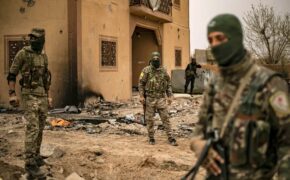
More recently, when ISIS seized territory across Iraq in 2014, thousands of Yazidi women were captured, sold in slave markets, and trafficked across the region.
War economies frequently depend on the exploitation of vulnerable populations. In unstable environments, women and girls face increased risks of forced labour, trafficking, and survival sex, often invisible in official histories of conflict.

Collapse of Civilian Life: Health, Hunger, and Survival
War devastates the systems that sustain everyday life.
Healthcare collapses, hospitals are destroyed, and medical staff flee. Pregnant women are forced to give birth without assistance, sometimes in refugee camps or makeshift shelters. Maternal mortality often rises sharply during conflict, while malnutrition and disease spread rapidly.
Conflicts in Afghanistan, Syria, and Gaza illustrate how the destruction of infrastructure disproportionately affects women, whose health needs often go unmet amid chaos and scarcity.
Displacement and the Feminisation of Survival
Modern wars are increasingly fought within civilian spaces, and their human consequences are reflected in global displacement patterns. Women and children make up the majority of refugees worldwide.
In overcrowded camps and temporary settlements, women face heightened risks of exploitation, trafficking, and violence. At the same time, with men often absent, detained, or killed, women frequently become heads of households responsible for securing food, safety, and stability for their families.
War thus produces what some scholars describe as the “feminisation of survival.”

Women as the Backbone of Postwar Recovery
Despite their vulnerability, women consistently play central roles in sustaining and rebuilding societies during and after conflict.
They organise informal economies, rebuild communities, maintain education for children, and preserve social networks fractured by violence. Yet this labour is rarely recognised within official narratives of reconstruction.
Understanding women’s contributions to survival complicates simplistic portrayals of women solely as victims of war.
Contemporary Crises: The Pattern Continues
The gendered realities of war remain starkly visible today.
In Palestine, women face displacement, bereavement, and the collapse of healthcare systems amid ongoing bombardment and blockade. In Sudan’s current conflict, reports document widespread sexual violence and mass displacement affecting women and girls.
In the Democratic Republic of Congo, sexual violence continues to be used by armed groups as a strategy of terror. Among Rohingya refugees, women face long-term insecurity in overcrowded camps after fleeing ethnic cleansing in Myanmar.
These crises differ in context but reveal a consistent pattern: women continue to experience war primarily through its civilian consequences.

The Myth of Liberation
Despite this history, military interventions are frequently framed through the language of liberation, particularly the liberation of women.
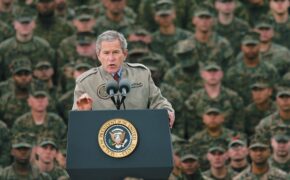
The 2001 invasion of Afghanistan was repeatedly justified in Western political rhetoric as a mission partly aimed at improving women’s rights under Taliban rule.
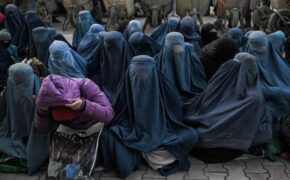
Yet two decades of conflict brought widespread displacement, insecurity, and violence that profoundly affected Afghan women. The Taliban’s return to power in 2021 raised further questions about the effectiveness of military intervention as a tool for advancing women’s rights.
This pattern has led many scholars to describe such rhetoric as a form of instrumentalisation, the use of women’s suffering as moral justification for geopolitical objectives.
Rethinking War Through Women’s Experience
Across centuries and continents, one lesson emerges with striking clarity: women’s experiences of war rarely resemble the narratives used to justify it.
War may be narrated through heroism and sacrifice, but for millions of women it is experienced through loss, endurance, and survival.
If the international community is serious about understanding the human cost of conflict, women’s experiences must be centred, not as an afterthought, but as fundamental to how war is understood.
Until then, the promise that war will somehow liberate women will remain one of its most persistent and misleading myths.

☕ Loving my work? Aw, thanks.
If something I wrote lit a spark or gave you something to think about, why not buy me a coffee? It’s a small gesture that helps keep this work honest, independent, and fiercely human.
References
UN Women. Gender Snapshot 2025. Available at:
https://www.unwomen.org/en/digital-library/publications/2025/09/gender-snapshot-2025
United Nations High Commissioner for Refugees (UNHCR). Global Trends: Forced Displacement in 2025. Available at:
https://www.unhcr.org/global-trends
UK House of Commons Library. Women and Children in Armed Conflict. Available at:
https://commonslibrary.parliament.uk/research-briefings/cbp-10478/
Brownmiller, Susan. Against Our Will: Men, Women and Rape. New York: Simon & Schuster, 1975. Available at:
https://archive.org/details/againstourwillme00brow
Seifert, Ruth. War and Rape: Analytical Approaches. Geneva Centre for Democratic Control of Armed Forces, 1994. Available at:
https://www.files.ethz.ch/isn/28294/2007_women_conflict_rapes.pdf
Card, Claudia. “Conquest by Rape and War.” Hypatia, Vol. 11, No. 4, 1996. Available at:
https://www.jstor.org/stable/3810381
Baaz, Maria Eriksson and Stern, Maria. Sexual Violence as a Weapon of War? Perceptions, Prescriptions, Problems in the Congo and Beyond. London: Zed Books, 2013. Available at:
https://www.zedbooks.net/shop/book/sexual-violence-as-a-weapon-of-war/
Enloe, Cynthia. Bananas, Beaches and Bases: Making Feminist Sense of International Politics. Berkeley: University of California Press, 2014. Available at:
https://www.ucpress.edu/book/9780520284299/bananas-beaches-and-bases
Tickner, J. Ann. Gender in International Relations: Feminist Perspectives on Achieving Global Security. New York: Columbia University Press, 1992. Available at:
https://cup.columbia.edu/book/gender-in-international-relations/9780231075391
United Nations Security Council. Resolution 1820: Women and Peace and Security. 2008. Available at:
https://documents.un.org/doc/UNDOC/GEN/N08/391/44/PDF/N0839144.pdf
Skjelsbæk, Inger. The Political Psychology of War Rape. Oxford: Routledge, 2012. Available at:
https://www.routledge.com/The-Political-Psychology-of-War-Rape-Studies-from-Bosnia-and-Herzegovina/Skjelsbaek/p/book/9780415685354
Comments (0)